Getting to grips with technology enhanced learning literature – new paper by Denise Sweeney

What Technology Enhanced Learning (TEL) literature do new university teachers and lecturers actually find useful? How do university teachers engage with TEL literature in their practice? Does disciplinary background influence TEL literature choices? Find out answers to these questions in a new paper by LSRI member Denise Sweeney, “Getting to grips with technology enhanced learning literature: Wading out of murky waters” (open access) can be found here. The paper is published in the inaugural edition of Studies in Technology Enhanced Learning. This new open-access academic journal aims to support scholarly conversation about Technology Enhanced Learning....
Read More

Researching Education – accessible summaries of research

Do you work in education and want access to summaries of recent research papers?Do you want to know what is happening in educational research but don’t have access journal databases?Do you want to share summaries of your research with a wide audience? If you answered yes to any of these then you should visit Researching Education. ‘Researching Education’ is an online arena within which educational researchers can present summaries of their recently published studies - that may be of interest to educational practitioners.  Many practitioners do not have access to the websites where research papers are to be found; so this service allows individuals to subscribe to a regular email ‘contents list’ that provides direct links to selected study summaries, written by the authors.  The service is currently managed by Charles Crook from the LSRI on behalf of the Nottingham School of Education Visit and sign up to Researching Education here....
Read More

Essay mills and the portrayal of HE student experience

Many essay mills adopt empathic narratives to secure custom from students. But how are student’s higher education experiences represented in these narratives? Do essay mills portray higher education practices in a positive or negative manner? And what impact could these narratives have on student’s beliefs about higher education? In How Internet Essay Mill Websites Portray the Student Experience of Higher Education, LSRI member Charles Crook and University of Nottingham colleague Elizabeth Nixon explore these questions. If you want to find out more, this paper is published by The Internet and Higher Education and is available at https://doi.org/10.1016/j.iheduc.2020.100775...
Read More

LSRI @ ICLS 2020

We went to Nashville. Bobby Whyte to present a full paper on Designing multimodal composition activities for integrated K-5 programming and storytelling; Freydis Vogel was part of a symposium on "Combining Scripts, Group Awareness Tools and Self-Regulated Learning – Theoretical Implications and Practical Implementations" Johnny Halls to the early career workshop, Pryce Davis to run a workshop on "Communicating design-based research: A workshop for creating and interpreting design arguments and; Shaaron Ainsworth to present a short paper on Designing Drawing Activities to Support Simulation-based Learning in Quantum Mechanics OK so we did not go to Nashville -we stayed at out desks in Nottingham and attended virtually. If you went to ICLS too, please watch our presentations on the ICLS conference site and tell us what you thought. If you can spare the time for only one - can we recommend Bobby's paper. He was nominated for the best student paper and I wish we could have seen him perform it live; but...
Read More
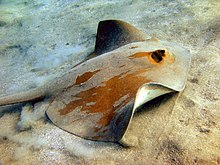
Move like a fish?

Move like a fish?

Can enactment help you recognise and understand the movement patterns of creatures with bodies very different to our own? A collaboration between researchers at the LSRI at Nottingham and Leibniz-Institut für Wissensmedien in Tübingen set out to answer that question. If you want to read about what we found out you can in this paper now published by Computers and Education....
Read More

PhD success for Ipek Saralar-Aras !

Congratulations to Dr Ipek Saralar-Aras who today successfully defended her thesis. While passing a viva is always a huge achievement, it is even more impressive considering the current coronavirus outbreak which resulted in a last-minute change to a virtual viva.  Ipek has been a highly valued member of the LSRI since 2016, investigating how technology-enhanced learning can improve Turkish middle school students’ understanding of three-dimensional geometry. She will be very much missed by colleagues and friends both at the LSRI and across the wider university. We wish her all the best for her future career in Turkey. ...
Read More

New article on Inquiry-Based Instruction by Mary Oliver

Interested in inquiry-based instruction in science education? Concerned about the efficacy of the approach to develop scientific literacy? Or want to learn more about how variables are conceptualised in PISA? If so, have a look at the new article my LSRI member Mary Oliver. ‘The Efficacy of Inquiry-Based Instruction in Science: a Comparative Analysis of Six Countries Using PISA 2015’ was recently published in Research in Science Education. In this article, Mary Oliver and colleagues from Murdoch University in Perth, Australia, conduct a comparative analysis of students’ scientific literacy and its association with different instructional strategies (inquiry-based, adaptive and teacher-directed). They do this by drawing on six countries that participated in PISA 2015....
Read More

Successful viva for Nurjanah Jaafar

Congratulations to Dr Nurjanah Binti Mohd Jaafar who today successfully defended her thesis. Janah has been at the LSRI since 2015 working on her thesis titled ‘How to non-native speakers of English read multi-representational texts?’. It has been wonderful to have Janah working at the LSRI for the last few years, she will be sorely missed by many friends and colleagues at the University of Nottingham. We wish her all the best for her future career in Malaysia....
Read More

New publication by Mary Oliver and colleagues

Inquiry Based Learning (IBL) in science education has received much funding, promotion and policy support from the EU. But how do teachers view IBL? And what are their experiences of engaging in IBL? A recent publication by LSRI member Mary Oliver addresses these questions. The article, titled ‘Highly Recommended and Poorly Used: English and Spanish Science Teachers’ Views of Inquiry-based Learning (IBL) and its Enactment’, was a collaborative piece with colleagues from the University of Jaen, Spain, and the University of Nottingham, UK. Follow the link to find out about how science teachers in England and Spain view and enact Inquiry Based Learning....
Read More

Higher Education Partnership with Peru

Together with Andrew Joyce-Gibbons from the University of Durham and Carol Rivero Panaqué from PUCP University in Lima, we have successfully raised funding from the British Council supporting academic exchange between the LSRI and PUCP in Lima, Peru. Various workshops in Lima and Nottingham will be conducted throughout November and December 2019. Learning Sciences is still an underrepresented subject in higher education in Latin America. Thus, the workshops will be focused on introducing the Learning Sciences approach to academics in Peru, supporting the launch of a Learning Sciences course at PUCP, and ongoing academic exchange between the institutions....
Read More